


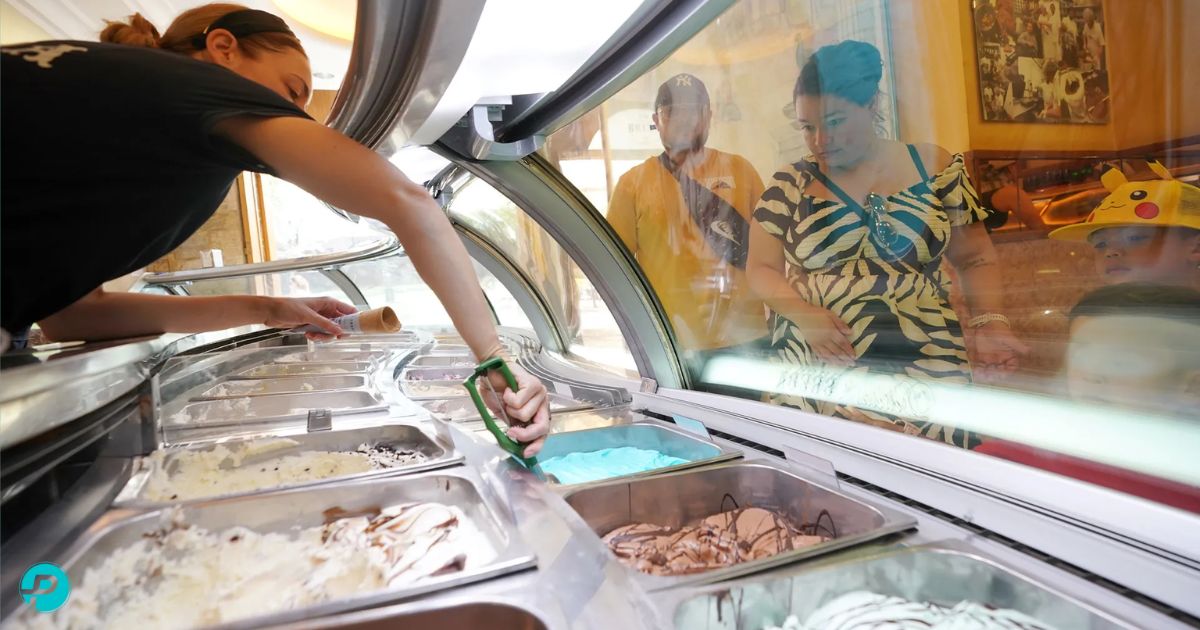
The headline “Bankruptcy Forces Ice Cream Chain to Close 500 Locations” has captured attention across the United States. For decades, Thrifty Ice Cream was more than just a dessert brand; it was a cultural staple. Generations of families grew up stopping by a Rite Aid pharmacy, not only for medicine but also for a hand-scooped cone of Thrifty’s uniquely shaped ice cream.
Now, as bankruptcy forces this ice cream chain to close 500 locations, the nostalgia and tradition associated with those counters face an abrupt ending. The shutdown is part of a larger story involving Rite Aid’s financial struggles, industry-wide retail decline, and shifting consumer habits.
The History of Thrifty Ice Cream
Thrifty Ice Cream traces its roots back to 1940 in Los Angeles, California, when it first introduced its distinct cylinder-shaped scoops. Affordable, flavorful, and available in dozens of creative flavors, the ice cream quickly became a hit.
By the mid-20th century, Thrifty had established itself as a family-friendly brand known for quality at a reasonable price. When Rite Aid acquired Thrifty, the scoop counters became a signature attraction inside hundreds of pharmacies across the West Coast.
For over 80 years, these counters symbolized community. Whether it was after school, post-doctor’s visit, or just a summer treat, Thrifty Ice Cream was deeply woven into daily life. That’s why the news that bankruptcy forces the ice cream chain to close 500 locations feels like losing a piece of Americana.
How Bankruptcy Forces Ice Cream Chain to Close 500 Locations
The chain’s closure is tied directly to Rite Aid’s Chapter 11 bankruptcy filing. The pharmacy giant, burdened by billions in debt and legal liabilities from opioid-related lawsuits, announced a restructuring plan.
As part of that plan:
- Nearly 500 Thrifty scoop counters inside Rite Aid stores will shut down.
- The ice cream production facility in El Monte, California is up for potential sale.
- Packaged Thrifty products will remain in grocery stores, but the iconic in-store scooping experience is ending.
This decision illustrates how corporate financial woes can ripple outward. Even though Thrifty Ice Cream itself was beloved and profitable in niche markets, the parent company’s collapse means bankruptcy forces the ice cream chain to close 500 locations.
bankruptcy forces ice cream chain to close 500 locations
Why Thrifty’s Scoop-Counters Became Iconic
The scoop counters stood out for several reasons:
- Unique Scoop Shape: Thrifty’s cylindrical scoop gave cones a signature look.
- Affordable Treats: At times when inflation hit hard, families could still afford a cone.
- Community Gathering Spot: The counters were a reliable place for parents, children, and friends to connect.
- Flavor Variety: From classics like chocolate malted crunch to seasonal specials, the brand catered to diverse tastes.
These qualities made Thrifty different from chains like Baskin-Robbins or Cold Stone Creamery. Its authenticity built a cult following that now mourns as bankruptcy forces the ice cream chain to close 500 locations.
bankruptcy forces ice cream chain to close 500 locations
Impact of the Closures on Communities
The closure of 500 scoop counters doesn’t just affect dessert options—it affects jobs, community culture, and local economies.
- Employees: Hundreds of workers who staffed the counters are losing jobs.
- Neighborhood Identity: In smaller towns, Rite Aid with its Thrifty counter was a social anchor.
- Local Traditions: Birthdays, family outings, and first dates often included a Thrifty cone.
This cultural impact explains why the news resonates so deeply. It’s not just that bankruptcy forces ice cream chain to close 500 locations; it’s that a shared tradition is disappearing.
bankruptcy forces ice cream chain to close 500 locations
The Role of Rite Aid in the Shutdown
To understand the closures, it’s essential to examine Rite Aid’s financial situation:
- Rite Aid filed for Chapter 11 bankruptcy in October 2023.
- The company faced $3.3 billion in debt and thousands of lawsuits.
- Store closures across the country created ripple effects, including the end of the Thrifty counters.
Thus, while Thrifty Ice Cream remains beloved, its fate is tied to the struggles of its parent company. Once again, bankruptcy forces the ice cream chain to close 500 locations, showing how financial restructuring reshapes customer experiences.
bankruptcy forces ice cream chain to close 500 locations
Will Thrifty Ice Cream Survive Beyond the Counters?
There’s a glimmer of hope for fans. While scoop counters are ending, the Thrifty brand itself may live on:
- Packaged Products: Pints and cartons will remain available in select grocery chains.
- Possible Sale: Industry insiders speculate another buyer might purchase the brand and factory.
- Franchise Potential: Some argue Thrifty could survive as a standalone ice cream shop brand if revived independently.
Still, the phrase “bankruptcy forces ice cream chain to close 500 locations” underscores the uncertainty. Survival will depend on new ownership and consumer demand.
bankruptcy forces ice cream chain to close 500 locations
Comparisons with Other Retail & Food Industry Bankruptcies
Thrifty’s closure isn’t unique—it fits into a broader trend:
- Friendly’s Ice Cream: Struggled with multiple bankruptcies before a smaller revival.
- Howard Johnson’s: Once iconic, now down to one restaurant.
- Toys “R” Us: Closed in 2018 due to debt, later revived in limited form.
Each case demonstrates how beloved brands can vanish—or reinvent—when financial crises hit. Thrifty now joins this list as bankruptcy forces ice cream chain to close 500 locations.
bankruptcy forces ice cream chain to close 500 locations
Consumer Reactions and Cultural Loss
Public response has been emotional:
- Social Media Tributes: Fans share photos of cones and stories of childhood visits.
- Petitions: Some communities have called for preserving Thrifty counters.
- Media Coverage: Headlines highlight the emotional and nostalgic dimensions.
The reactions show that this isn’t just another retail shutdown. When bankruptcy forces ice cream chain to close 500 locations, it strikes at memory, tradition, and identity.
Conclusion
The phrase “Bankruptcy Forces Ice Cream Chain to Close 500 Locations” captures a profound shift in American culture. Beyond financial restructuring, this story is about the end of shared traditions, beloved flavors, and community rituals tied to Thrifty Ice Cream.
While packaged products may endure, the magic of walking into a pharmacy and leaving with a hand-scooped cone is gone. Whether Thrifty reinvents itself or becomes only a nostalgic memory remains to be seen.
FAQs
Which ice cream chain is closing 500 locations?
Thrifty Ice Cream, located inside Rite Aid stores, is shutting down scoop counters as bankruptcy forces ice cream chain to close 500 locations.
Is Thrifty Ice Cream completely gone?
No. Packaged Thrifty products will still be sold in select grocery stores, but the in-store counters are closing.
Why is Rite Aid closing Thrifty counters?
Rite Aid filed for bankruptcy due to debt and lawsuits. As part of restructuring, bankruptcy forces the ice cream chain to close 500 locations.
Can Thrifty Ice Cream survive without Rite Aid?
Possibly. The brand may be sold or licensed to new owners who could revive it independently.
What makes Thrifty Ice Cream special?
Its unique cylindrical scoops, affordable pricing, and nostalgic place in American culture set it apart.
